

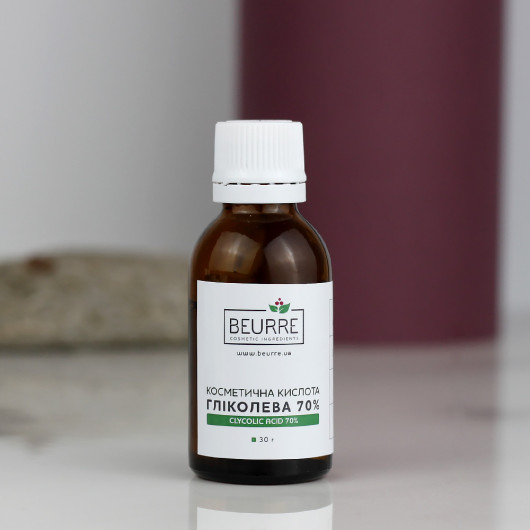
Glycolic acid 70% 30 g
| Producer: | China |
| Appearance: | liquid |
| Solubility: | water soluble |
- Availability: Out of stock
Glycolic acid 70% solution for skin care and peeling
Glycolic acid is an organic acid of the AHA group, which is widely used in cosmetics for skin renewal and rejuvenation. Effectively solves the problems of acne, hyperkeratosis and age-related changes, providing a deep exfoliating and moisturizing effect. Due to the ability to accelerate cell renewal, glycolic acid evens out the texture and tone of the skin, making it smoother and fresher. The use of glycolic acid in cosmetics helps to achieve a visible improvement in the condition of the skin after just a few applications.
For precautions on the use of cosmetic acids, read the article from Beurre "Precautions when working with AHA/BHA acids".
Component characteristics and specific use
INCI: Glycolic acid, water
Appearance: liquid
Color: from transparent to light yellow
Origin: natural
Dosage: 0.3 - 10% (dosing in higher concentrations is allowed for professional use)
Solubility: in water, does not dissolve in oils
Storage: in a dark, dry place in a tightly closed package at a temperature not exceeding 25 C. Protect from direct sunlight
Features of using an aqueous solution of glycolic acid
Stability
- may be unstable at high temperatures. With prolonged heating, its activity decreases,
- it exhibits its exfoliative properties better in an acidic environment (pH 3-4),
- loses effectiveness with prolonged contact with air and light.
Incompatibility
- when mixed with alkaline components (for example, sodium hydroxide or EDTA), its activity is significantly reduced,
- proteins and peptides can be denatured or destroyed under the influence of glycolic acid, as well as under the influence of other AHA acids,
- combining with vitamin C, retinoids - can cause skin irritation.
Glycolic acid 70%: a cosmetic component with a powerful effect
Glycolic acid 70% is an aqueous solution of one of the most active alpha hydroxy acids (AHA), widely used in cosmetology and dermatology. This natural component is produced from sugar cane, beets and some types of fruits. Due to its small molecular weight, glycolic acid effectively penetrates the epidermis, helping to remove dead cells, lighten pigmentation and improve skin texture, which makes it especially effective for exfoliation and stimulating cell renewal processes.
Suitable for all skin types, but especially recommended for oily, combination and mature skin. When using natural cosmetics, it is important to maintain low concentrations for home use (usually up to 10%), and higher concentrations, such as 70%, are used in professional peels under the supervision of a cosmetologist.


Cosmetics and additional properties
- exfoliates dead skin cells, cleanses pores and improves the overall appearance of the skin,
- stimulates cell renewal, increasing elasticity and providing firmness and smoothness of the skin,
- promotes collagen production, which achieves smoothing of wrinkles and slowing down aging,
- lightens pigment spots, including post-acne and age spots,
- improves the barrier functions of the skin,
- has a moisturizing effect, increasing the moisture-holding capacity of the epidermis,
- improves the penetration of other active components into the deeper layers of the skin.
Glycolic acid is effective in eliminating skin pathologies such as hyperkeratosis, acne and post-acne, seborrheic dermatitis and melasma. Its regular use helps to normalize keratinization processes, reduce breakouts and lighten pigment spots.
Efficiency studies
In the L'Oreal laboratory, it was found that glycolic acid stimulates the synthesis of collagen and elastin, which leads to a decrease in the depth of wrinkles and increased elasticity of the skin. IN VITRO studies have also shown that glycolic acid reduces hyperpigmentation, signs of photoaging and evens out the overall skin tone.
According to a study published in the journal Dermatologic Surgery, regular use of peels with glycolic acid provides a significant reduction in the depth of wrinkles, and also increases the firmness and elasticity of the skin (Dermatologic Surgery 2005). IN VITRO research has shown that glycolic acid stimulates the synthesis of glycosaminoglycans, which increases the level of skin hydration and slows down the aging process (Journal of Cosmetic Dermatology).
In combination with hyaluronic acid, glycolic acid helps maintain skin hydration after peeling.
Glycolic acid is a versatile ingredient widely used in products such as:
- Peeling and exfoliants
- Face serums
- Body creams and lotions
- Skin care products for severe acne and hyperpigmentation
- Anti-aging products
- Skin care products for feet and elbows, for the correction of hyperkeratosis.
Precautions
May cause irritation on sensitive skin, if barrier functions are impaired or if there are active inflammatory processes. When using products with glycolic acid, it is important to avoid direct contact with the sun (as the skin becomes more sensitive to ultraviolet radiation) and use sunscreens. It is not recommended to use products with a high concentration of acids (more than 10%) without consulting a dermatologist.
Handmade cosmetics recipes, formulas and reviews
It is very difficult to create your own correct recipes if you are new to cream maker. And we are ready to help you with this. Go to the YouTube channel Beurre Cosmetic Kitchen, where we have already developed many recipes for handmade cosmetics and share the technology for making cosmetics with our own hands. And also you can check Blog from Beurre, where we share useful information about creating the right natural cosmetics.
| Товар | |
|---|---|
| Producer: | China |
| Appearance: | liquid |
| Solubility: | water soluble |