


Parsol Zx (micronized zinc oxide) 20 g
| Producer: | DSM |
| Appearance: | powder |
| Solubility: | dispersed in the base |
- Availability: In Stock
Parsol Zx, a sunscreen ingredient for mineral makeup, provides comprehensive UV protection
Parsol Zx micronized zinc oxide is a very fine white powder combined with triethoxycaprylylsilane for improved dispersion. This physical inorganic filter can be used alone or in combination with other sunscreens. Zinc oxide is most often combined with titanium dioxide, as well as with the organic UV filter Tinosorb S lite aqua. Parsol Zx protects the skin from UVA and UVB radiation, ensuring versatility. It leaves no strong white residue, is inert and hypoallergenic, and creates non-greasy, gentle formulas.
Characteristics of the component and peculiarities of use
INCI: Zinc Oxide, Triethoxycaprylylsilane
Particle size: 90-130 nm (D50)
Molecular weight: 91.38 g/mol
Dosage: 1–25%. In Japan, there is no upper limit for dosage
Use: Dispersible in oils or emollients. Heat-resistant
Features: Parsol Zx should be added to the oil phase and is well dispersed in all common cosmetic oils or emollients. For better dispersion, the manufacturer recommends using a dispersing agent (e.g. Polyhydroxystearic Acid), but this is not a mandatory recommendation. When working with any ZnO, it is necessary to control the pH. At pH <7, divalent Zn2+ ions will migrate into the aqueous phase and may cause emulsion instability, since zinc ions interact with some polymers and emulsifiers. It is better to use Parsol Zx in water-in-oil (W/O) systems. It is better to use non-ionic thickeners, such as xanthan gum, as a thickener. Most acrylate polymers are sensitive to zinc ions, so the effectiveness of these thickeners may be impaired.
Storage: in a dry, dark place in a tightly closed container. Protect from high humidity. Do not exceed storage temperature above 25 C.
Cosmetic Properties of a Physical UV Filter
Parsol Zx is a micronized zinc oxide powder with a particle size of 90-130 nm (D50), which allows for a more even texture in sunscreen.
Zinc is a physical filter and acts as a reflective screen. Unlike chemical filters, which absorb UV rays, Parsol Zx reflects them. This makes it suitable for use even on sensitive skin and in children's cosmetics, as it does not cause allergic reactions. Furthermore, unlike chemical filters, which begin to work approximately half an hour after application, Parsol Zx acts immediately.
Using Parsol Zx zinc oxide in formulas offers the following benefits:
- does not produce a strong "whitening" effect on the skin after applying the cream, unlike non-micronized zinc oxide
- does not cause phototoxic or photoallergic reactions
- protects against UVA radiation
- has anti-inflammatory and antimicrobial properties
- has an antiseptic effect
- regulates sebum production
- inhibits sweat breakdown.
Based on this impressive list of benefits, it can be concluded that Parsol Zx is not only a sunscreen ingredient, but is also widely used in the cosmetics industry to create cosmetics for oily and problematic skin, antiseptic products, and baby care products (diaper creams, etc.).

Parsol Zx Sunscreen: Application and Dosage
Parsol Zx zinc oxide can be added to sunscreen formulations at a dosage of up to 25% according to European standards, while Japanese standards do not specify an upper dosage limit. It is recommended to add 2 to 25% Parsol Zx to cosmetics. Regarding the production of sunscreen cosmetics and the correct calculation of the SPF formula, you should consider the following information.
How to calculate SPF with mineral filters
Let's take a closer look at the tests conducted on formulating Parsol Zx zinc oxide and another manufacturer's zinc oxide (marked as Benchmark) in combination with Parsol Tx titanium dioxide (you can substitute this one for titanium dioxide). A water-in-oil emulsion was used, containing various grades of ZnO at a concentration of 18% in combination with 7% Parsol Tx. The formula does not contain other UV filters. SPF was tested in vivo on 10 volunteers. In vivo SPF determination is in accordance with the international standard ISO 24444:2010.
As a result, Parsol Zx demonstrates higher SPF efficacy compared to the other zinc oxide (marked as Benchmark). A combination of 18% Parsol Zx and 7% micronized titanium dioxide achieves SPF 54.

As mentioned above, Parsol Zx disperses easily in any oils and emollients. However, to improve dispersion, it is recommended to use dispersing agents. This simple rule makes working with mineral filters easier, especially at high dosages in the formula. The following are used as dispersing agents:
- Polyhydroxystearic acid
- Polyglyceryl-3 Disostearate,
- Polyglyceryl-2
- Dipolyhydroxystearate
- Polyglyceryl-3
- Polydimethylsiloxyethyl
- Dimethicone
- fluid emollients such as Gosulin IL, Catiol RLF, and others.
Blue Light Protection
The calculation of the blue light protection factor (BPF) is based on the SPF principle:
SPF is the ratio of the protected MED to the unprotected MED. Another way to understand SPF is the ratio of the inverse of the sunburn transmittance value, T (see graph below).

A sunscreen with a BPF of 2 already absorbs and protects from 50% of blue light rays!
Zinc oxide, regardless of its form and particle size, is used in various cosmetic formulas:
- in sunscreens for oily skin, children's skin, and sensitive skin
- face and body cosmetics
- makeup
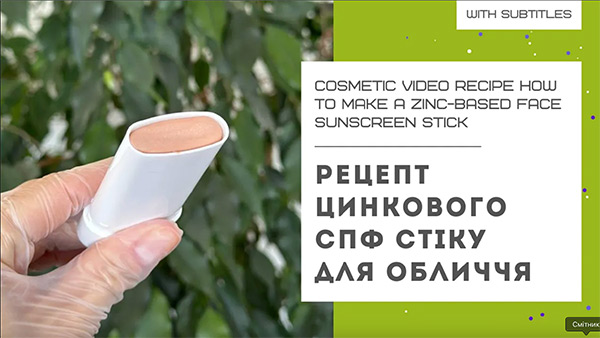
- sunscreen cosmetics (including zinc paste and sticks)
- medicinal cosmetics.
Below you can find the framework formula from the manufacturer Parsol Zx, which uses a combination of zinc oxide and titanium dioxide.

Recipes for handmade cosmetics
If you are new to cream making - it is very difficult to make your own correct recipe. And in this we are ready to help you. Go to youtube channel Cosmetic Kitchen Beurre, where we have already developed many recipes (with Amitose DGA including) and share the technology of making cosmetics with your own hands.
| Товар | |
|---|---|
| Producer: | DSM |
| Appearance: | powder |
| Solubility: | dispersed in the base |