


Titanium dioxide micronised 30 g
| Producer: | Japan |
| Appearance: | powder |
| Solubility: | dispersed in the base |
- Availability: In Stock
Optical SPF filter
Stabilized titanium dioxide made in Japan. With a particle size of approximately 0.21 μm, it creates an optically smoothing effect on the skin, improves formula sensitivity, and increases the stability of formulations. Ideal for BB creams, CC creams, primers, SPF bases, powders, and foundations with a natural skin finish.
What is Titanium Dioxide and what are the differences between its types read in the article “Titanium Dioxide in cosmetics”.
Component Characteristics and Usage
INCI: Titanium Dioxide, Aluminum hydroxide, Trimethylolpropane
CAS No.: 13463-67-7, 21645-51-2, 77-99-6
Compliant (EU) *E-171; (EU)No. 231/2012
CFR compliant (USA) * 21 CFR 73.2575
Typical dosages:
- Soft-focus/tinted products: 0.5-3%
- BB/CC/foundation creams: 2-10%
- Powders: 5-25%
- SPF sticks/high-coverage creams: up to 30%
pH: 5-9
Density: 3.5-4.2 g/cm3
Form: rutile
Oil capacity: 14g/100g
Particle size (core, including coating):
- Titanium dioxide - 0.21 μm
- Aluminum hydroxide - 0.24 μm
- TMP - 0.28 μm
Dispersible in the oily phase or emulsion.
Features: Does not contain nanoparticles, microplastics, GMOs, carcinogenic or mutagenic substances. Animal testing of this cosmetic ingredient has not been conducted since March 2009, in accordance with Council Directive 76/768/EEC and Regulation (EC) No. 1223/2009.
Storage: Store in a dry, dark place in tightly sealed packaging. Protect from high humidity.
Types of UV Filters
UV filters in cosmetics are divided into chemical (organic) and physical (mineral). Chemical filters absorb UV radiation and convert it into thermal energy, while physical filters work primarily by reflecting and scattering light.
One of the main mineral UV filters is titanium dioxide (TiO₂), a photostable inorganic pigment widely used in SPF systems due to its effective protection against UVB and part of the UVA spectrum.
Titanium Dioxide Forms
Titanium dioxide is used in the cosmetics industry primarily in two crystalline modifications: anatase and rutile.
- Anatase is unstable and, when exposed to UV rays, can generate reactive oxygen species (ROS), accelerating oil oxidation, component degradation, and reducing formula stability. While it offers higher whiteness and opacity, it is actually used in cheaper formulations.
- Rutile is considered the standard for cosmetic and SPF systems. It is less prone to oxidation and is more compatible with oils, UV filters, and pigments. In decorative cosmetics, rutile TiO₂ provides softer light diffusion, a natural soft-focus effect, and a less pronounced "putty effect." It is used in premium SPF, BB/CC creams, primers, and foundations.
This type of titanium dioxide does not belong to the classic nano-range (usually 15-60 nm), but rather to titanium dioxide with a small particle size. This is an important technological difference:
- 20-60 nm - transparent sunscreen-grade UV filters
- 210 nm - optical pigment with a soft-focus effect
- 250-350+ nm - pigments with a high degree of coverage
The key nuance is that the particle size of 210 nm is the zone where titanium dioxide begins to act not only as a UV reflector, but as a full-fledged optical texture pigment. This is where the characteristic Japanese "tone-up skin effect" appears, rather than just a white covering pigment, like theatrical makeup.
Specific features of this SPF system
Aluminum hydroxide is an inert isolating coating. It reduces the formation of free radicals under UV rays, increases the photostability of the pigment, and protects the formula from oxidation and yellowing. Additionally, it improves pigment compatibility with emulsion systems and makes the optical finish more stable.
TMP - increases TiO₂ compatibility with oils, silicones, and esters. This coating improves pigment dispersion, reduces the dry, chalky feel, increases glide, and makes the coating thinner and more uniform. As a result, DT provides a softer, soft-focus effect and less pronounced whitening.
UV protection level of finely dispersed titanium dioxide:
- 2-3% - predicted SPF 2-5
- 5% - predicted SPF 5-7
- 10% - predicted SPF 10-18
- 15% - predicted SPF 15-20
- 20% - predicted SPF 20-25
However, SPF increases nonlinearly: after 15-20%, effectiveness begins to increase significantly more slowly; it is advisable to combine it with chemical filters.
Technological nuances of incorporation into formulations
This form of diesel fuel has a pronounced dependence on the quality of dispersion. The final SPF, whitening, sensory properties, and stability are determined not so much by the incorporation percentage as by the state of the particles in the finished system.
The main goal is to prevent secondary agglomeration. This is achieved by properly combining the oily phase (silicones + emollient cascade) and an optimal system (inverse emulsifiers, etc.). Low-stability, high-water systems without good dispersion should be avoided. Acrylate copolymers are the preferred choice for gelling the aqueous phase. They are most effective in hybrid SPF systems, in combination with Uvinul A Plus and Tinosorb S Lite Aqua.
Micronized titanium dioxide combines well with other fillers:
- silica
- boron nitride
- mica
Cosmetics that use titanium dioxide:
- Sunscreen emulsions
- BB cream
- CC cream
- Skin tint
- Foundations
- Soft-focus primers
- HD makeup products
- Cream correctors
- Concealers
- Compact powders
- Loose powders
- Finishing powders
- SPF sticks
- Cream blush and highlighters
Handmade cosmetics recipes and reviews
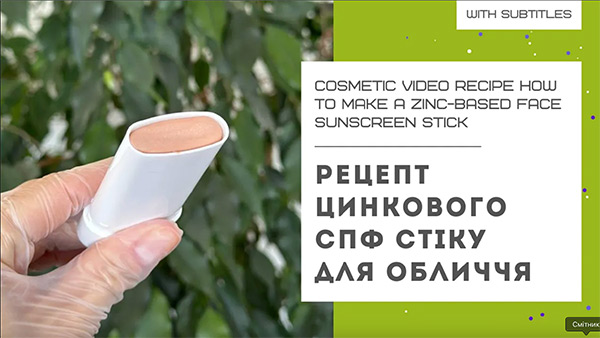
It is very difficult to create your own correct recipes if you are new to cream maker. And we are ready to help you with this. Go to the YouTube channel Beurre Cosmetic Kitchen, where we have already developed many recipes for handmade cosmetics and share the technology for making cosmetics with our own hands. And also you can check Blog from Beurre, where we share useful information about creating the right natural cosmetics.
| Товар | |
|---|---|
| Producer: | Japan |
| Appearance: | powder |
| Solubility: | dispersed in the base |