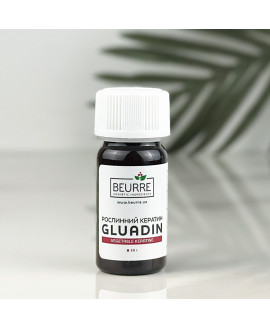
Microproteins for hair: their varieties and cosmetic effect

Beautiful hair has always been a human adornment. However, the harmful effects of the environment, constant stress, the use of dyes, bleaches, hair stylers, contribute to the fact that they lose their vitality, shine and elasticity. To solve this problem, cosmetic developers have access to many components, but hydrolysates are considered one of the most common and accessible for hair restoration, namely their low-molecular forms - microproteins.
What are microproteins
Microproteins are called hydrolysates of proteins with a low molecular weight. In general, we have already discussed what hydrolysates are and their varieties in the article "Hydrolysates and amino acids of proteins: differences and application in cosmetics", so now we will focus on microproteins. What molecular weight of hydrolysates can be considered low? Approximately up to 3000 Da. That is, hydrolysates with a molecular weight below 3000 Da can be classified as microproteins. In turn, microproteins can be further divided into two subgroups by molecular weight:
- Medium molecular weight - 1500-2000 Da
- Low molecular weight - below 1000 Da
Below we will list the most common microproteins that are available on the cosmetic market. The most popular and affordable in Ukraine are proteins from the German manufacturer BASF.
Manufacturer Product
INCI
Molecular weight, Da BASF Nutrilan Milk
Hydrolyzed Milk Protein
3000
BASF
Hydrolyzed Keratin
2000
BASF
Lamequat L
Laurdimonium Hydroxypropyl Hydrolyzed Collagen
2500
BASF
Gluadin R Benz
Hydrolyzed Rice Protein
2000-3000
BASF
Gluadin Soy Benz
Hydrolyzed Soy Protein
2500
BASF
Hydrolyzed Wheat Protein
2400-3000
BASF
Hydrolyzed Vegetable Protein
1500
BASF
Gluadin WLM Benz
Hydrolyzed Wheat Protein
500
There is also a wonderful series of low-molecular microproteins from the Japanese manufacturer Seiwa, but unfortunately, they are not so easy to order in Ukraine.
Manufacturer Product
INCI
Molecular weight, Da SEIWA
Promois WU-32R
Hydrolyzed Collagen (and) Water
400
SEIWA
Promois WK-F
Hydrolyzed Keratin (and) Water
400
SEIWA
Promois S-720F
Hydrolyzed Silk (and) Water
350
SEIWA
Promois WR
Hydrolyzed Rice Protein (and) Water
400
SEIWA
Promois WG
Hydrolyzed Wheat Protein (and) Water
700
SEIWA
Promois WS-HF
Hydrolyzed Soy Protein (and) Water
700
SEIWA
Promois WJ
Hydrolyzed Pea Protein (and) Water
500
As we can see, the source for the production of microproteins is both animal raw materials (hydrolyzed collagen, keratin or milk protein) and various plant materials. Moreover, microproteins of plant origin are in no way inferior to animal ones, because they have a similar amino acid composition and are perfectly integrated into the damaged hair structure. Also, it is microproteins of plant origin that have a lower molecular weight and are able to penetrate deep into the hair, which we will discuss further.
The effect of microproteins on hair
It is not for nothing that we focus on the values of the molecular weight of microproteins, because it is this indicator that determines the depth of penetration into the hair and the degree of restoration of damaged areas. To understand the mechanism of this process, you must first consider the structure of the hair.
Hair structure
The outer part of the hair is called the shaft and consists of three main layers:
- The outer layer (cuticle) is the hair shell, which has a structure similar to fish scales. The cuticle protects the inner part of the hair from the effects of the external environment. If the scales fit tightly to the cortex, the hair looks shiny and smooth.
- The cortex is the main part of the hair. The cells of this layer make up the bulk of the hair - up to 90% and mainly determine its growth. The cortex has a complex structure and is a type of protein compounds called hair keratin.
- The medulla (core) is the central part of the hair shaft, which occupies about 6% of the hair volume. It consists of protein compounds and contains voids filled with air.
Between the cuticle and the cortex there is an additional, highly resistant structure that prevents the penetration of substances into the cortex and is called the cell membrane complex (hereinafter CMC). All studies show that penetration through the CMC is the main route of delivery of active substances to the hair cortex. They also indicate that it is the "small" molecules that best pass this barrier and penetrate inside. The only additional path for the penetration of substances with a higher molecular weight may be large cracks and pores resulting from mechanical damage to the hair surface. Examples of such cracks are shown in the figure.


Mechanism of microprotein penetration into different hair layers
Conventional high molecular weight hydrolysates cannot penetrate deeper than the cuticle layer or cracked cortex due to size limitations. In addition, they can unfold and adsorb on the surface, forming a film and filling cracks. In addition, this film is not washed off from cracks as effectively as from the surface. Therefore, high molecular weight hydrolysates have an immediate effect of surface moisturizing and prevent the rupture of damaged areas by filling the formed cracks. This is why it is recommended to include various hydrolysates in hair formulas: both in rinse-off products and in leave-in cosmetics.
A study of the penetration of microproteins with medium molecular weight using fluorescence microscopy showed that they are able to penetrate the upper layers of the hair cortex. Despite fairly deep penetration and slow washing out of the hair, medium molecular weight proteins did not have an adequate effect on hair swelling from the inside. Their mechanism of action is similar to high-molecular hydrolysates and is aimed at restoring hair, softening, and preventing damage. The difference is that medium-molecular microproteins act internally, have a prolonged effect, and, due to their similar structure to hair keratins, partially restore damaged areas.
All the results of the size study show that only low-molecular-weight microproteins penetrate deep into the hair cortex in large enough quantities to affect hair swelling. Their low molecular weight allows them to quickly penetrate the CMC and change the protein structure, which causes swelling of the cortex by about 11%. That is, these microproteins are able to fill dry and thin hair, making it stronger and healthier. We remind you that low-molecular-weight hydrolysates have a molecular weight below 1000 Da.
Protein cascade
As we can see, hydrolysates and microproteins, due to the difference in molecule size, affect the condition of the hair differently. And when developing a cosmetic formula for hair, we have a question: what proteins exactly should we use in these formulas and in what cases? The answer is quite simple: it is possible and necessary to combine different proteins in one formula. For this purpose, in modern cosmetic chemistry there is a concept called a protein cascade.
A protein cascade is a step-by-step restoration of hair due to the penetration of proteins into different layers of hair. Low-molecular microproteins quickly penetrate and fill the deep layers of the cortex. Next, medium-molecular proteins act on the upper layers of the cortex, which restore hair and prevent further damage. And the final stage of this step-by-step care is high-molecular hydrolysates, which cover the hair with a protective restorative film, which, in addition to its own action, also slows down the leaching of microproteins from the cortex, which provides a long-term effect.
Protein ratio for creating formulas
The most common question from cosmetic manufacturers is what components and in what dosages to add to obtain the desired cosmetic effect. And here we want to help you and leave ideas on what proteins, in what dosage and in what combinations can be added to recipes. Not all components are available in the BEURRE store, but the ideas will help you understand the principle of formulating according to the type of hydrolysate and its molecular weight.
Ratio for repairing damage and adding shine, smoothing and conditioning effect
- Nutrilan Keratin W PP 0.5%
- Gluadin Kera-P LM 1%
- Gluadin WLM Benz 0.5%
- Aminosoft Wheat 1%
- Gluadin WQ PP 0.5%
- Gluadin Kera-P LM 1%
- Nutrilan Keratin LM 2%
- Nutrilan Milk 0.5%
For filling hair from the inside, increasing its thickness
- Gluadin WQ PP 0.5%
- Gluadin Kera-P LM 0.5%
- Gluadin WLM Benz 2%
And for especially thin and damaged hair, the ratio of two types of proteins works great
- Gluadin W 40 BP 1%
- Gluadin WLM Benz 1%
- Gluadin WLM Benz 1%
- Gluadin Soy Benz 1%
- Gluadin WLM Benz 2%
- Gluadin R Benz 0.5%
To sum it up, we can say that microproteins are truly bestsellers in the care of damaged hair. And we hope that after reading this article, you will definitely start using them in your formulas. And you will find even more useful information and basic recipes on our channel Cosmetic Kitchen BEURRE.
© beurre.ua
All materials are copyrighted. It is forbidden to use (copy, distribute, modify, etc.) materials of the site beurre.ua without prior consent.